Before organizing, it’s time to clean up first
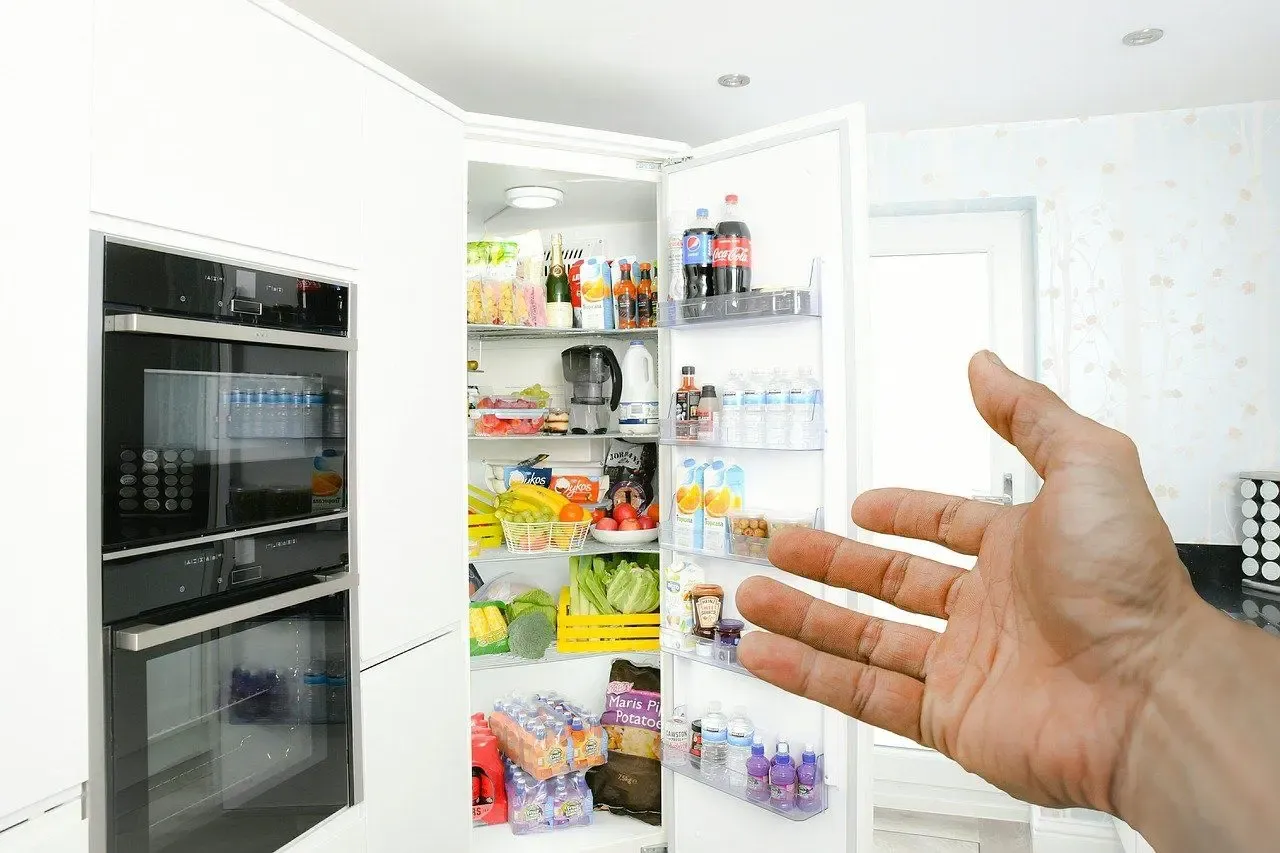
Before tidying up and organizing, a thorough cleaning is called for. First, everything must be taken out - that means the food and any drawers and shelves that can be removed. Then, the refrigerator should be disconnected from the power supply. The deep cleaning can also be combined with defrosting - something many people like to procrastinate (myself included). Afterwards, all parts should be thoroughly washed. Instead of harsh chemicals, you can use vinegar water. Simply mix it in a 1:2 ratio. It works just as well but is less harmful to the environment. Don’t forget the handles and the egg compartment! You should also thoroughly clean the outside of the refrigerator. Not only does it prevent the fridge from cooling against a layer of dirt, but a completely clean refrigerator also looks much better.
What else belongs to the basic cleaning of the refrigerator
Not only should the refrigerator be thoroughly cleaned. One can also take the opportunity to clean tubes and lids. A good example is the ketchup bottle, where the rim and the lid often get crusty - or the maple syrup bottle. The ‘big clean’ can be extended to such items - and it immediately looks much better in the refrigerator.
The crisper - the Bermuda Triangle for fruits and vegetables
In the vegetable compartment of the fridge (that is, in the bottom drawer), fruits and vegetables tend to ‘disappear’ only to reappear months later, shriveled and moldy (by the way, I’m no exception). Simply because they were out of sight, out of mind. In the Smantry App, you can assign specific storage locations to food items. This helps prevent forgetting them.
Now it’s time to organize
To get an overview, you should first gather all the food items that were in the refrigerator. If you like, you can also sort these into food groups, for example, cream with milk, etc. Leftover food should be transferred into space-saving containers. Drinks can be stored in a bottle holder. This prevents bottles from rolling around or the vegetable compartment from being overrun by beverages. To make optimal use of the space in the fridge, square containers are particularly suitable, who would have thought?
The top compartment
Here it is the ‘warmest’ in the refrigerator. The temperature in the upper fridge compartment is between 8 degrees and 10 degrees. This is where food that doesn’t need to be cooled as much should go. These include, for example, butter, jam, eggs, sausage, cheese, and leftovers.
The middle compartment
There, temperatures are around five degrees. This is where dairy products such as yogurt, cream, and curd belong. If there’s no more space in the top compartment, you can also store sausage and cheese there. To make optimal use of the storage space, you should use square storage containers. You can, of course, label these as well. Nowadays, there are many manufacturers that offer organizers and other products to keep your refrigerator tidy. Of course, it’s more sustainable to first use what you already have at home.
The bottom compartment
Here it is coldest at around 3 degrees Celsius. For example, meat and fish belong in the lower refrigerator compartment. So, easily perishable food items.
The vegetable compartment
As the name suggests, the vegetable compartment is for fruits and vegetables. The temperatures there are relatively mild at 9 degrees Celsius. Those who do not eat fruits and vegetables can, of course, use the compartment for other foods or beverages.
The refrigerator door
The refrigerator door is particularly suitable for storing beverages or other containers that are rather tall (and can also easily disappear into the depths). This includes, for example, yogurt cups, bottles of sauces, ketchup, and/or mayonnaise. Of course, butter and eggs can also be stored in the corresponding compartments.
These foods do NOT belong in the refrigerator - although they often end up there
There are certain foods that should not actually be stored in the refrigerator. These include, for example, cucumbers, bell peppers, or avocados. Similarly, tomatoes or potatoes should not be kept in the fridge. Fresh eggs also do not necessarily need to be stored in a cool place. As a rule, it is sufficient to store them in the refrigerator after a few days.
In our Smantry App you can assign the refrigerator as a storage location for the corresponding food items. This should prevent any unpleasant surprises, such as yogurt that has grown moldy ;)
Read next