User Survey 2023

Matthias Schmid

February 1, 2023 · Reading time: 2 Minutes
image

Our last survey took place in November 2021 - 173 of you participated and provided many valuable suggestions on how we can improve.

For instance, we learned that most users in 2021 lived in a couple's household without children and preferred to do major shopping 1-2 times a week. The most bothersome thing for you during shopping in 2021 was forgetting the shopping list at home - and while cooking, when needed ingredients had expired and had to be thrown away. Three quarters of the users cooked at home at least 3 times a week themselves.

We have consistently taken your feedback to heart in the development and design process - however, a scientific evaluation of it all has unfortunately not taken place.

Keep track of supplies, groceries and durable products before small price increases turn into unnecessary extra costs.

Or try it right in your browser — no install needed

We are changing that now - with the support of the Technical University of Munich, Chair of Consumer Research, we have developed a questionnaire that will allow us to get to know our users - that is, you - even better, in order to develop our Pantry App more effectively and specifically for you.
As a thank you, we will donate 1€ to "Restlos Glücklich e.V." or "die Arche" for every completed survey.

Participation only takes 8-10 minutes (self-tested):
https://tummgmt.eu.qualtrics.com/jfe/form/SV_0P5OGeJi7OQcPgG

Thank you in advance for participating!

More blog posts

Zwei Screenshots aus Smantry 1.39: das Widget „Läuft bald ab“ auf dem Android-Home-Screen und der neue Haltbarkeits-Screen

Smantry 1.39: Home Screen Widgets, a New Expiry Screen and a Cleanup List

The summer update is here – and it’s one of the biggest in a long time. Smantry 1.39 brings together everything that has been added since version 1.37: expiration dates now appear right on your home screen, entering best-before dates has its own dedicated page, and for the items you eventually just forget about, there’s now a cleanup list. Here’s an overview.

Your pantry on the home screen: widgets for iOS and Android

PortableText [components.type] is missing "image"

The most important view in Smantry is the one that answers the question:What’s expiring soon? From now on, you don’t even have to open the app for that anymore – the“Expiring soon” widget brings the answer straight to your home screen. OniOS it’s brand new, and onAndroid we’ve completely overhauled it in this version: it reliably receives data again, now shows the same countdown texts as on iOS, and opens the corresponding list when you tap it.

On the iOS home screen, the widget is available in two sizes:

  • Small: a large number shows how many items are due in your reminder period – plus the most urgent product.
  • Medium: multiple items with countdown (“today”, “tomorrow”, “in 3 days”).

In addition, on iOS there are three lock screen widgets: circular, rectangular, and a slim line above the clock – so you can glance at the display without unlocking it.

The colors help you prioritize: Red means overdue, Orange due today, Yellow due within the next three days. Important: The time period the widget considers as “soon” is not a fixed value – it adopts the reminder lead time from your settings. And when there’s nothing coming up, a green checkmark shows “Your stock is up to date” – sometimes the best widget is the one that leaves you in peace.

Technically nicely implemented: The widget keeps counting the days on its own and stays accurate, even if you never open the app. It doesn’t need the internet or its own database access for this – when you use it, the app simply stores a local snapshot of your expiry data. On iOS, the widget works from iOS 16.

Tapping the widget now no longer just takes you into the app, but directly to the filtered view with exactly the items in question – including expired ones.

The new shelf-life screen: enter the date without any detours

PortableText [components.type] is missing "image"

Entering the best-before date is the most common action in Smantry – and that’s exactly why it now has its own, tidy page. Whether youscan an itemorcreate it manually: instead of a small dialog with number wheels, the new shelf life screen opens with everything in one place:

  • Choose the type of date:Best-before date or use-by date – with a note that explains the difference (“Usually still good after this date.” versus “Do not eat after this date.”). The save button always tells you what you’re setting: “Save shelf life” or “Save use-by date”.
  • Quick selection: “In 3 days”, “In 1 week”, “In 2 weeks”, “In 1 month”, “In 3 months”, “In 1 year” – one tap is enough. For rice, canned goods & co. there is “No best-before date (long-lasting)” – this selection is now also reliably saved. For the storage date, which lies in the past, the list is reversed accordingly: “Today”, “Yesterday”, “1 week ago” and so on.
  • Fine-tuning:Use − and + to jump by whole days; the relative display (“In 31 days”) immediately gives you a feel for the date.
  • Calendar included:The built-in calendar is limited to sensible years – no more accidentally scrolling all the way back to 1900.

The storage date now has its own screen instead of sharing a selection list with the expiration date. The two dates are never edited at the same time – that may sound like a small detail, but it has eliminated exactly the mix-ups that previously generated the most feedback.

Also handy: The input now always remains visible above the keyboard, and the scan flow no longer gets interrupted when the notification permission is requested for the very first date.

Only month and year? That’s enough for now.

PortableText [components.type] is missing "image"

Many products don’t show a full date, but only “best before 05/2027”. One of the most requested community suggestions has therefore now been implemented: the “month-only” mode.

Simply switch from “Exact date” to “Month only” in the shelf life screen, type in `MM.YYYY` – done. Smantry automatically saves the end of the month, i.e. the last day on which the product is still good according to the printed date. No more guessing which exact day it’s supposed to be.

Smantry only records the month in this case: in the list, on the website, and in the PDF export, only the month will appear – not an exact day, which never actually appeared on the packaging.

Forgotten items: the new decluttering list

PortableText [components.type] is missing "image"

Every pantry has them: items that expired long ago and have still been sitting untouched on the list for weeks. Until now, Smantry has only pointed them out – but hasn’t offered anything to help you get rid of them.

That’s what the new “Clean Up” screen changes. It gathers all items that expired more than 14 days ago and haven’t been touched since, with the most overdue ones first. And it gives you exactly two buttons per item:

  • Red trash can (“Way”) – the item is removed from stock.
  • Green check mark (“Still there”)– nothing changes; you’ve just confirmed that the item still exists.

On the dashboard, a card points the way (“3 items are waiting for you”), whichautomatically hides itselfas long as there’s nothing to tidy up. No badge constantly nagging you.

Best-before date or use-by date? The difference matters everywhere now

“Best before” is a recommendation – “use by” is a limit. Smantry now consistently distinguishes between the two, in the app and in the web version. For ground meat you set a use-by date, for pasta a best-before date, and you mark long-lasting items as “does not expire” – they then won’t appear in the expiry warnings at all.

There are two new filters to go with this: “not yet expired” – a view for everything that’s still good, as a counterpart to the existing “expired” filter – and “expiring soon or expired”, the view you land in after tapping the widget.

Memories that match the product

PortableText [components.type] is missing "image"

Up to now, there was one reminder period for everything: five days before the best-before date, whether it was yogurt or frozen pizza. Now you can set it per item. In the item form there is a field called “Reminder (days before best-before date)” – if you leave it empty, your default value from the settings will still apply.

Practical for anything that needs more lead time: for a pack of meat you still want to freeze, two days’ notice is already too late – for canned goods, on the other hand, two weeks’ warning is just noise.

Expired is not the same as expired

A yogurt that is three days past its best-before date is a different matter than a canned good that is three days past. That’s why Smantry can now assess expired items in relation to their original shelf life instead of just counting the days since the best-before date.

You can find this option in the settings under “Rate expired items based on their original shelf life” – along with two thresholds that define at which remaining percentage of the original shelf life an item turns yellow or red. If you prefer to keep things simple, just leave this option disabled.

Used up or thrown away? One tip makes the difference

PortableText [components.type] is missing "image"

When you take an item out of your stock, you can now quickly record whether it was eaten or thrown away – either directly on the item using the fork or trash can button, or when removing it via the dialog (“Was it used up or did you have to throw it away?”). This also works for partial quantities, for example if you only had to throw away half of it.

Why this matters: Smantry helps you avoid food waste. And that works best when you know exactly what regularly ends up in your trash. This data stays within your household and will form the basis for future statistics – you’ll be able to see how much you’re really saving.

Date format: DD.MM.YYYY, also in English

PortableText [components.type] is missing "image"

Previously, the way dates were written depended on the app language – if you used Smantry in English, you were forced to use `MM/DD/YYYY`. These are now two independent settings: Under “Date format” you can choose `DD.MM.YYYY`, `MM/DD/YYYY` (US) or `DD/MM/YYYY` (French) – regardless of which language the app uses to talk to you. In the app and in the web version.

Further innovations at a glance

  • New units: You can now also count items in portions and packages – for everything that can’t really be measured in grams or liters.
  • Premium for two: Your individual Premium subscription now includes a second license. Simply invite your partner to join your team – at no extra cost.
  • Shelf and compartment in view:The stock list now shows the specific compartment of a storage location and the earliest best-before date of an item directly in the row.
  • Move instead of delete: When deleting a storage location, Smantry offers to move the items instead – even to the storage location of another household.
  • Filters that stay:Your filters in the pantry list now survive an app restart.
  • Nothing gets lost anymore:If the app is terminated by the system while you’re entering an item, your typed data will be there again the next time you start it.
  • Scanner fine-tuning: Barcodes are now correctly recognized even with the front camera and when the device is rotated, the scanner no longer freezes when you return to it, and if camera access is missing, the app takes you straight to the settings.
  • Siri and Shortcuts (iOS):In the Shortcuts app, you’ll find three new Smantry actions – “What expires soon?” responds directly in Siri without launching the app. The actions require iOS 17 and are currently only available in English.
  • Emails in your language:Confirmation and password reset emails will now be sent in your app’s language.
  • PDF export cleaned up:The printed stock list is now sorted and filtered exactly like your view in the app.
  • Subscription management: Plan changes now work without the risk of double billing, and with “Update status” you can immediately refresh the subscription status after a purchase – in case it’s still lagging behind.
  • Improved readability:Large system fonts are now supported – scaling is capped at an upper limit instead of being ignored, so the layout stays intact.

Update now

Smantry 1.39 is available in the App Store and on Google Play. Just open the store and download the update – your pantry is already waiting for its widget.

You have feedback on the new features or an idea for the next version? Tell us directly in the app via the support chat or in the feedback portal. That’s exactly how the “month-only” mode, per-item reminders, and many other improvements in this update came about.


August 19, 2026
9 min read
Lebensmittelverschwendung im Sommer: Warum wir ausgerechnet jetzt am meisten wegwerfen – und was dagegen hilft

Food waste in summer: Why we throw away the most right now of all times – and what helps against it

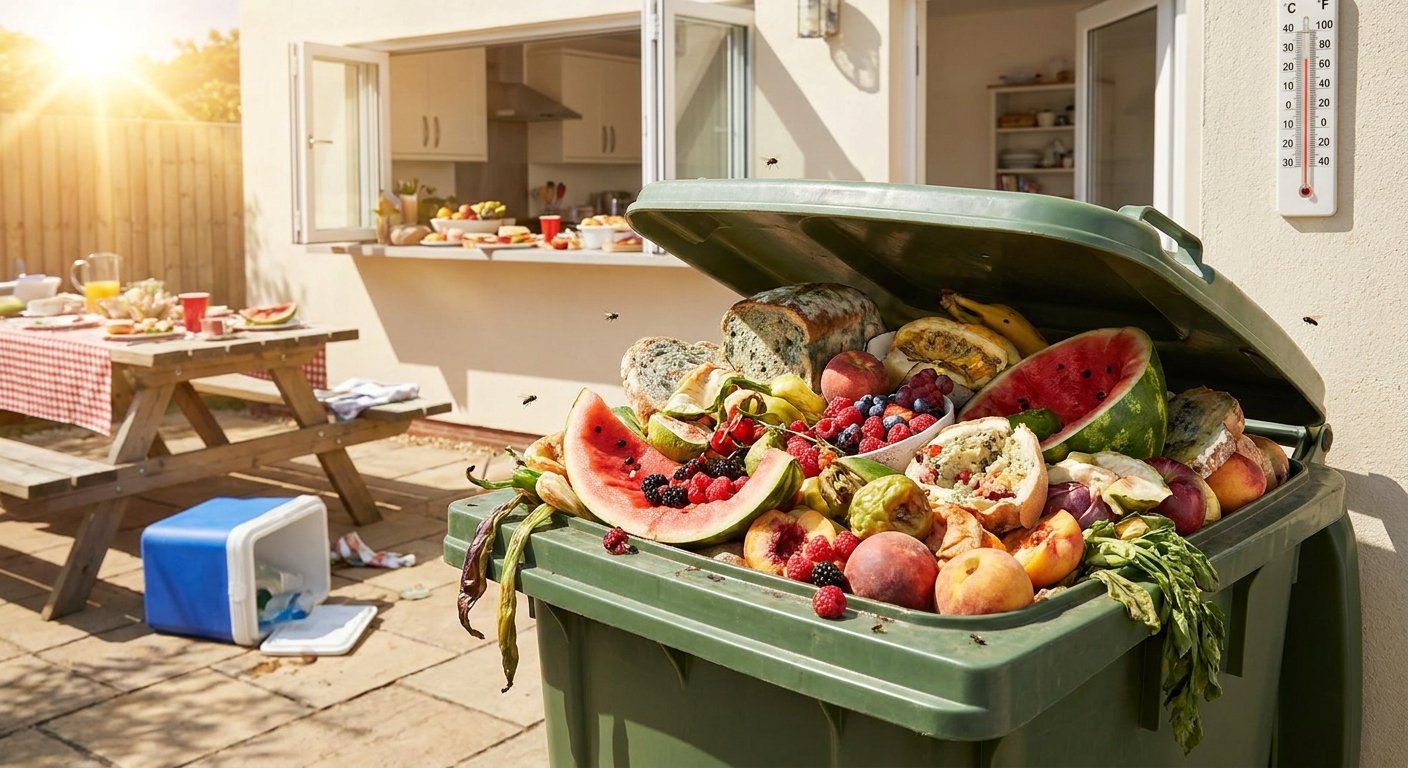
Summer brings barbecues, vacations, and bustling farmers’ markets. What often goes unnoticed: it’s precisely in the warm months that especially large amounts of food end up in the trash in German households. The reasons are surprisingly everyday ones – and with a bit of awareness, they’re easy to avoid.

How big is the problem? The figures

Before we turn to the special features of summer, it’s worth taking a look at the bigger picture. According to a report by the Federal Ministry of Food and Agriculture (BMLEH), around 10.8 million tons of food were thrown away in Germany in 2022.

The frightening thing is: Almost 58 percent of this waste is generated in private households – that’s about 79 kilograms per person per year. Not in restaurants, not in supermarkets. In our own homes.

The initiative Too Good for the Bin sums it up like this: The biggest leverage lies in the everyday lives of consumers – and with it the greatest opportunity to make a difference.

Why summer is the most critical season

1. Heat accelerates spoilage

The most important factor is simple: heat makes food spoil faster. According to R+V Versicherung the number of bacteria doubles at summer temperatures in just 20 minutes. Individual foods can therefore spoil on the way home from the supermarket – for example, if they are transported in a heated car.

The German Nutrition Society (DGE) explicitly warns: Perishable foods such as meat, fish, dairy products and egg dishes are particularly sensitive to high temperatures. Anyone who breaks the cold chain in summer risks not only food waste, but in the worst case also food poisoning.

Particularly perishable in summer:

  • Berries (strawberries, raspberries, blueberries)
  • Soft cheese and cold cuts
  • Avocados (hard to judge, quickly become overripe)
  • Meat and fish
  • Fresh herbs

2. We buy more impulsively in summer

In winter, most purchases are planned. In summer, markets tempt us with fresh strawberries, grill stands with spontaneous ingredients, and we shop more generously than usual. The problem: what looks tempting at the market often ends up forgotten in the vegetable drawer the next day – and spoils twice as fast as in winter.

3. Barbecue evenings regularly produce leftovers

Barbecue season is a special chapter in the story of food waste. You shop for ten people, but only seven show up. You plan generously because you want the evening to be spontaneous. The result: meat, grilled vegetables and salads that nobody wants anymore – and that are forgotten in the fridge even faster than in winter.

4. Holidays and Unattended Refrigerators

One of the most common—and most avoidable—summer scenarios: you leave for vacation without checking the fridge first. Arugula from last week, yogurt just about to expire, cheese that really should have been used up long ago. Two weeks later you come back and throw everything out at once.

What really helps: 5 concrete tips for the summer

Tip 1: Check what you still have before you go shopping

The simplest and most effective step. If you know what you still have, you shop more deliberately and avoid buying duplicates. With an app like Smantry, a quick look before shopping is enough – all your supplies, fridge contents, and expiry dates at a glance.

Tip 2: Strictly maintain the cold chain in summer

Always put frozen goods and fresh meat into the shopping cart last. In hot weather, take a cooler bag with you. Take your groceries straight home and put them in the refrigerator immediately.Consumer Advice Center NRWalso recommends buying smaller quantities but shopping more often on hot days.

Tip 3: Tidy up specifically before your vacation

Three to four days before departure, it’s worth checking the fridge: What is going to expire soon? What can still be used up or frozen? What can you give to a neighbor? Once you do this consciously, you’ll be surprised how much can be saved – and you’ll leave with a clear conscience.

Tip 4: Calculate barbecue quantities realistically

It’s better to plan conservatively and add more if needed. Leftover grilled vegetables can be turned into great salads, wraps or soups – but only if you still know what’s in the fridge and when it should be used up.

Tip 5: How to store food properly in summer

Some foods can exceptionally be stored in the fridge during summer, even though they are usually better kept at room temperature:

  • Tomatoes and bell peppers: In the height of summer, they can be put in the fridge for a short time – the flavor and texture change slightly, but spoilage is prevented
  • Bread: Do not store in the refrigerator (it will become dry and hard), but in a ventilated bread box or – for longer storage – in portions in the freezer
  • Oils: Store in a dark, cool place; in very hot weather, the refrigerator can be a good option

The real problem: lack of oversight

Food waste rarely happens out of indifference. It happens because of a lack of oversight. We don’t know what we have. We buy things twice. We forget what’s at the back of the fridge.

So the first step isn’t a new recipe or a new habit – it’s getting an overview. Anyone who knows what they have and when it needs to be used up will automatically make better decisions.

The Smantry app was developed precisely for this problem: as a digital memory that supports you in everyday life – with no effort, no need to change your habits, and no guilty conscience.

→ Try it now for free

Conclusion: Summer is solvable

79 kilograms of food per person per year – that sounds like a structural problem that individuals can hardly influence. But especially in summer it becomes clear: many of these losses occur in very specific moments. When buying too much for a barbecue. When going on holiday without checking the fridge. When forgetting the yogurt behind the juice bottle.

Small changes in behavior therefore have a particularly direct impact in summer. And if you use a digital memory to help, you don’t even have to remember very much yourself.

Further resources and links

Smantry App – throw away less, keep more. Download the app for free | All blog articles

Read next

May 21, 2026
6 min read
Smantry? Ja, wir sind's noch. Warum wir unseren Namen von Speisekammer.App zu Smantry geändert haben

Smantry? Yes, it’s still us. Why we changed our name from Speisekammer.App to Smantry

Maybe you recently searched for “Speisekammer App” and suddenly saw a different name. Maybe that confused you, or you thought the app no longer exists. Maybe you even switched to another app because you couldn’t find us again.

We’re sorry about that. And that’s exactly why we’re writing this article today.

We’re still here. We are Smantry. And we’d be happy to explain to you what happened, why we took this step, and why this really only means good news for you as a user.

What was Speisekammer.App anyway?

Speisekammer.App was the name we started with. The idea behind it was as simple as it was important: an app that helps you keep track of your pantry, reduce food waste, and shop more smartly.

Every day, food ends up in the trash just because people forgot there was still something in the fridge. Because they bought the same thing twice. Because the best-before date was overlooked. Speisekammer.App set out to change exactly that, with a digital pantry system that simply works.

And it worked. Thousands of people have used the app, organized their fridges better, and thrown away noticeably less. That makes us proud.

But at some point we realized: the name is holding us back.

Why the name Speisekammer.App has reached its limits

A good product name grows along with the product. And that was exactly where the problem lay.

"Speisekammer" is a wonderful German word. Everyone knows it, everyone understands it immediately. But it is also a very specific word. It describes a place, a single room in the house where supplies are stored.

What we’ve built has long since grown beyond this one room. We don’t just help you manage your pantry. Together with you, we think about how your household as a whole can handle food more consciously: from the shopping list to using up leftovers, all the way to the question of what you can even cook this week based on what you already have at home.

➜ Simple tricks for using the Smantry app

On top of that, the name Speisekammer.App made it hard for us to think internationally. An app that only works in German because its name stops making sense once translated is a structural problem. Smantry, on the other hand, works in any language, sounds modern, and is easy to remember.

What is behind the name Smantry?

Smantry is a combination of smart and pantry. In other words: the clever, forward-thinking version of your food cupboard.

Smart here doesn’t just mean intelligent in the technical sense. It stands for a new way of thinking about everyday life: wasting less, consuming more consciously, planning better, without making life more complicated. Quite the opposite.

➜ Smantry: Not perfect – but made with a lot of heart

Pantry is the English word for larder and has experienced a kind of comeback in recent years. More and more people are talking about pantry organization, meal prepping, and zero-waste cooking. Smantry builds on exactly this and combines the trend with a practical, everyday-friendly tool.

The name may not feel as familiar yet as “Speisekammer”. We understand that. New names take time. But we believe that Smantry is the right name for what this app is today and what it will become tomorrow.

What has changed for you as a user? Spoiler: Very little

This is the most important section of this article, so we’ll read it through slowly together.

Your account still exists. Exactly as you left it.

Your data is still there. No losses, no gaps, no restart.

Your lists, your products, your settings: everything is preserved.

The app will continue to work on your device. You don’t need to sign in again, set anything up again, or re-enter anything.

What you see is a new logo, a new name, and a freshly designed interface that’s clearer and more intuitive than before. But the heart of the app—your data and the system behind it—has stayed the same. We’ve only renovated the house, not torn it down.

➜ All the new features in the Smantry app at a glance

Why we are writing this article now

Because trust is the most important thing we have.

In the past weeks and months, we’ve noticed that many users who used to actively work with Speisekammer.App could no longer find us. They searched for the old name and were left confused. Some left because they thought the app had been discontinued.

That wasn’t a planned transition, that was a gap. And we’re going to close that gap now.

If we had lost you: welcome back.

If you’re just finding us for the first time: we’re glad you’re here.

And if you’ve stuck with us through all the changes: thank you. You’ve driven us forward.

Smantry and the issue of food waste, a mission that has not changed

No matter what we’re called or what we’re about, that stays the same.

In Germany, millions of tons of food end up in the trash every year. Most of this doesn’t happen in restaurants or supermarkets, but at home, in private households, at your place and ours. Yogurt that has passed its expiration date. Vegetables that were forgotten. The leftovers from Monday that didn’t make it to Wednesday.

➜ Making a lot out of a little: How to whip up simple recipes from your leftovers 🥕🥖✨

Smantry is our answer to this. No wagging finger, no logic of renunciation. Instead, a tool that makes your everyday life easier and at the same time helps ensure that less is thrown away. Good for your wallet. Good for the environment. Good for your conscience.

That was the mission of Speisekammer.App. That is the mission of Smantry. No difference.

What comes next

The name change wasn’t an endpoint; it was a fresh start. In the coming months, we will continue to develop Smantry, release new features, and further grow the community around mindful shopping and smart pantry management.

You can be part of it.

➜ Go directly to the Smantry app here

If you have questions, feedback, or just want to say that you’re glad you’ve found us again, write to us. We read everything and we really do reply.

The Smantry team

Still have questions about the name change or the app? Write to us or visit our FAQ page.

Read next

April 30, 2026
5 min read
Hope, der Wal und was sein Schicksal mit unserem Einkaufskorb zu tun hat

Hope, the whale, and what his fate has to do with our shopping basket

From awareness to responsibility: Why each of us should think of Timmy the next time we buy fish.


Since the beginning of March 2026, a humpback whale has been keeping Germany on edge. First spotted in the port of Wismar, “Timmy,” also affectionately called “Hope,” had become entangled in a net and was rescued. Since then, volunteers, veterinarians, politicians, and the entire nation have been emotionally fighting for him. Human chains, rescue boats, sandbags, drones. Everything is being tried to save this one animal.
That’s beautiful. And it’s a good thing.
But it also confronts us with an uncomfortable question: Why are we so deeply moved by a single whale, while every day we buy products that systematically kill whales and dolphins?

What connects Timmy with our everyday life

Timmy’s story is not just a natural spectacle. It is also a mirror. According to Wikipedia, his appearance on German coasts is a sign of the partial recovery of humpback whale populations – the result of decades of international protection measures and the moratorium on commercial whaling. Protection has worked.
At the same time, Timmy may be dying from exactly what happens every day: fishing nets.
His first appearance: he had become entangled in a net.

Bycatch: The Invisible Catastrophe

Bycatch is the leading cause of death for marine mammals worldwide. What few people realize: with every fish stick, every can of tuna, every shrimp cocktail, this silent mass dying can be co-financed.
What exactly is bycatch? When fishing with large nets (trawl nets, gillnets or purse seines), it’s not only the target fish that end up in the net. Whales, dolphins, sea turtles, sharks and seabirds are also caught. Many die in agony because they can no longer surface or are injured by the pressure of the net.
Particularly dramatic: the death of a single whale can destabilize an entire family group. Whales live in close social units. If the experienced matriarch, who knows the best feeding grounds, dies, the entire group suffers.

The MSC label: No free pass for whales

Many consumers trust the blue MSC label (Marine Stewardship Council) as a guarantee of sustainable fishing. The problem: even MSC-certified products do not guarantee adequate whale protection.
According to a study by NABU and BirdLife International, only 13% of the MSC-certified fisheries examined received a good rating on the issue of bycatch. For the overwhelming majority, the unwanted bycatch rates of whales, dolphins and other threatened species did not even decrease after certification.
The Whale and Dolphin Conservation organisation (WDC) is also clear: MSC certifications do not guarantee that whales and dolphins did not suffer or die during the catch.

Which fish products are particularly problematic?

These products and fishing methods are particularly under criticism:

🚫 Avoid or question

  • Tuna from purse seine nets (often canned). High dolphin bycatch; even MSC-certified fisheries in the Mexican Pacific have been criticized
  • Prawns and shrimpEspecially from trawl fisheries using bottom trawls, which also destroy the seabed; in addition: North Atlantic prawn and lobster fisheries demonstrably contribute to the decline of the North Atlantic right whale
  • Fish sticks, breaded fish and convenience products.Here, the origin and fishing method are often not declared.
  • Krill products (dietary supplements, omega-3 from krill). Krill is the main food source for whales; fishing it literally deprives them of their means of survival
  • Gillnet fishing in the North and Baltic Seas. According to WDC, very likely associated with negative impacts on harbour porpoise populations

What can we do? The good news

Consumption plays a part in the decision. And this is where smantry becomes relevant: anyone who shops consciously, wastes less, and deliberately chooses alternatives is already doing a lot.

PortableText [components.type] is missing "image"


📱 How the Smantry app helps

When you use Smantry to plan your food and avoid leftovers, you automatically reduce your footprint – including on the oceans. Anyone who plans more consciously shops more purposefully, chooses plant-based proteins more often, and takes a second look at the label when buying fish.
Tip: Use Smantry to replace fish meals more often with sustainable alternatives, e.g. legumes, mushrooms or tofu as the main protein source, and save fish for moments when you really know what’s in it.

The conclusion: Timmy as a turning point?

Millions of people have been rooting for Timmy in recent weeks. This shows how deep our connection with these fascinating animals is. Now it’s time to turn this feeling into action.
Because while Timmy’s rescue is in the spotlight, whales and dolphins are silently dying in nets every day. Without a name, without a hashtag, without a live blog.
Let’s make sure that the empathy we feel for Timmy doesn’t end with his fate, but begins with our next purchase.

Read this articles as well:

Cooking without shopping: recipes from the pantry

Quiet Saving: The new saving trend without sacrifice

How to optimize food storage – clever hacks for your pantry


Sources & further links:

Read next

April 23, 2026
4 min read