more than 10,000 active users

Organising food made easy.

Free

Simple organisation

Personal customer support

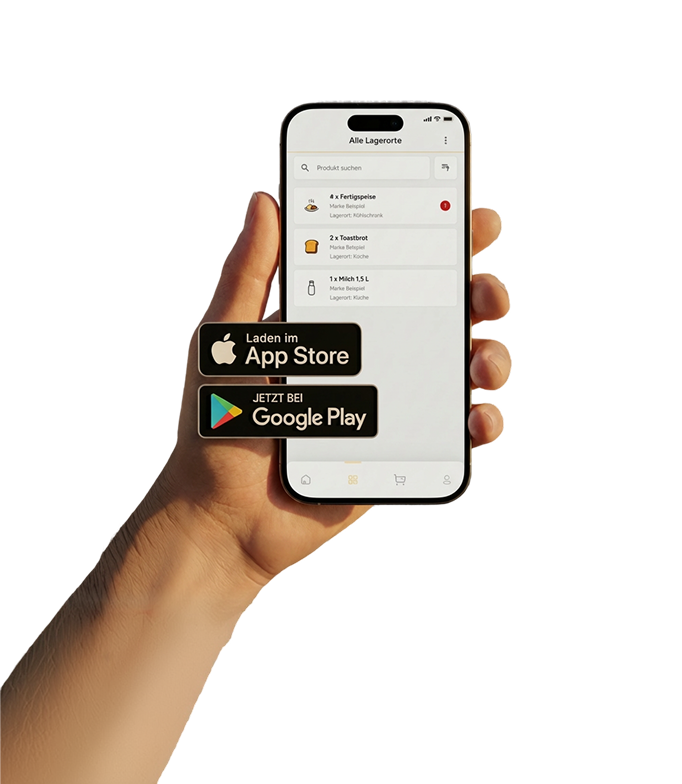
A hand holding a smartphone with the Smantry app open

Smart features for your everyday life

Everything you need to run your kitchen efficiently and sustainably.

  • Pantry overview

    Scan your groceries in seconds and keep an eye on your stock in real time. Never buy the same thing twice.

    • 10 expired 3.45 €
    • 4 opened 1.40 €
    • 5 expiring soon 2.60 €
  • Expiry reminders

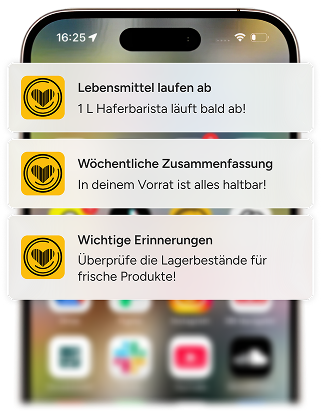
    Get a push notification in good time before your food expires. Less waste, more money saved.

    Smantry push notifications on a smartphone
  • Smart shopping lists

    Lists that fill themselves when your supplies run low. Share them with your family.

    • Oat milk (2x)
    • Spelt flour
  • Smart recipes

    Coming soon…

    Let Smantry suggest tasty recipes from what you already have, so nothing gets forgotten.

What our users say

Thousands of households already rely on Smantry.

  • “I finally stopped throwing food away. The app reminds me about my supplies at exactly the right moment. A game changer!”
    Laura Mother of two
  • “The interface is really intuitive, I had an overview of my food straight away. I have been saving real money ever since.”
    Anton Student
  • “I love the automatic shopping list! It is so relaxing not to stand in the supermarket wondering what is missing.”
    Katrin Freelancer

Managing food can be this simple.

With Smantry you keep track of your food effortlessly. Scan your supplies, plan meals and build a shopping list — all in a few taps.

Smantry showing automatic reminders

Choose your plan

From free to Enterprise — there is a plan for everyone.

  • base

    For free
    Package details
    • 1 user license

    • max. 100 items

    • Real-time synchronization

    • Barcode scanner

    • max. 10 storage locations

    • Nutritional values

    • Nutritional statistics

    • Preparation mode

    • Own product photos

    • Ad-free

  • Premium

    Most popular

    2,99 €

    per month, or 29,99€ yearly
    Package details
    • 1 user license

    • unlimited

    • Real-time synchronization

    • Barcode scanner

    • unlimited storage locations

    • Nutritional values

    • Nutritional statistics

    • Preparation mode

    • Own product photos

    • Ad-free

  • Premium Team

    3,95€

    per month, paid annualy
    Package details
    • 5 user licenses

    • unlimited

    • Real-time synchronization

    • Barcode scanner

    • unlimited storage locations

    • Nutritional values

    • Nutritional statistics

    • Preparation mode

    • Own product photos

    • Ad-free

  • Enterprise

    On request
    Get in touch — we put together a package that fits the team, the locations and the features needed.

Swap tips with other users.

Get pantry tips, discover new features and share your experience directly with the Smantry community on Telegram.

Illustration of a woman with a smartphone and Telegram

Ready to finally get an overview?

Join thousands of households already saving time and money with Smantry.

Start now for free rated 4.6/5 by our users

Discover our blog

Recipes, pantry tips and ideas against food waste.

Lebensmittelverschwendung im Sommer: Warum wir ausgerechnet jetzt am meisten wegwerfen – und was dagegen hilft

Food waste in summer: Why we throw away the most right now of all times – and what helps against it

Summer brings barbecues, vacations, and bustling farmers’ markets. What often goes unnoticed: it’s precisely in the warm months that especially large amounts of food end up in the trash in German households. The reasons are surprisingly everyday ones – and with a bit of awareness, they’re easy to avoid.

How big is the problem? The figures

Before we turn to the special features of summer, it’s worth taking a look at the bigger picture. According to a report by the Federal Ministry of Food and Agriculture (BMLEH), around 10.8 million tons of food were thrown away in Germany in 2022.

The frightening thing is: Almost 58 percent of this waste is generated in private households – that’s about 79 kilograms per person per year. Not in restaurants, not in supermarkets. In our own homes.

The initiative Too Good for the Bin sums it up like this: The biggest leverage lies in the everyday lives of consumers – and with it the greatest opportunity to make a difference.

Why summer is the most critical season

1. Heat accelerates spoilage

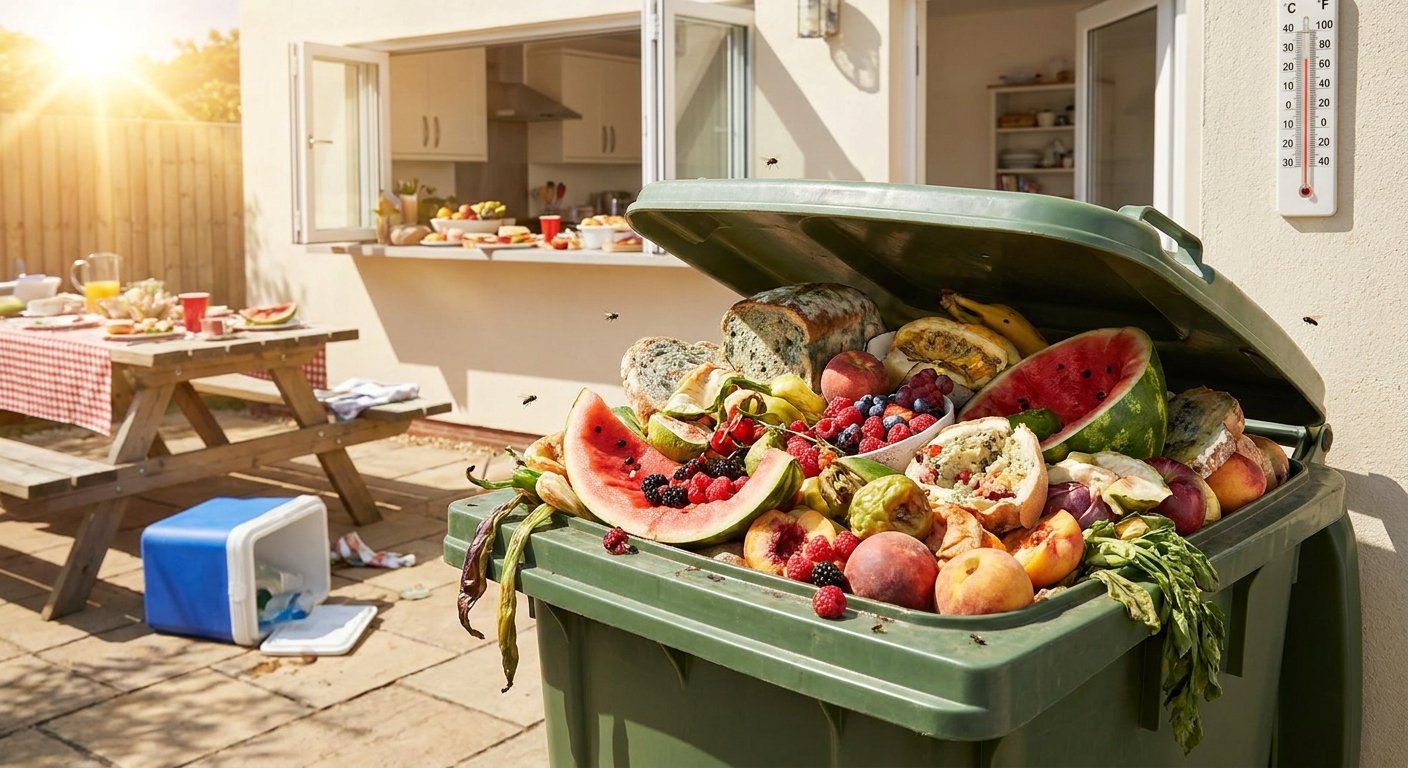
The most important factor is simple: heat makes food spoil faster. According to R+V Versicherung the number of bacteria doubles at summer temperatures in just 20 minutes. Individual foods can therefore spoil on the way home from the supermarket – for example, if they are transported in a heated car.

The German Nutrition Society (DGE) explicitly warns: Perishable foods such as meat, fish, dairy products and egg dishes are particularly sensitive to high temperatures. Anyone who breaks the cold chain in summer risks not only food waste, but in the worst case also food poisoning.

Particularly perishable in summer:

  • Berries (strawberries, raspberries, blueberries)
  • Soft cheese and cold cuts
  • Avocados (hard to judge, quickly become overripe)
  • Meat and fish
  • Fresh herbs

2. We buy more impulsively in summer

In winter, most purchases are planned. In summer, markets tempt us with fresh strawberries, grill stands with spontaneous ingredients, and we shop more generously than usual. The problem: what looks tempting at the market often ends up forgotten in the vegetable drawer the next day – and spoils twice as fast as in winter.

3. Barbecue evenings regularly produce leftovers

Barbecue season is a special chapter in the story of food waste. You shop for ten people, but only seven show up. You plan generously because you want the evening to be spontaneous. The result: meat, grilled vegetables and salads that nobody wants anymore – and that are forgotten in the fridge even faster than in winter.

4. Holidays and Unattended Refrigerators

One of the most common—and most avoidable—summer scenarios: you leave for vacation without checking the fridge first. Arugula from last week, yogurt just about to expire, cheese that really should have been used up long ago. Two weeks later you come back and throw everything out at once.

What really helps: 5 concrete tips for the summer

Tip 1: Check what you still have before you go shopping

The simplest and most effective step. If you know what you still have, you shop more deliberately and avoid buying duplicates. With an app like Smantry, a quick look before shopping is enough – all your supplies, fridge contents, and expiry dates at a glance.

Tip 2: Strictly maintain the cold chain in summer

Always put frozen goods and fresh meat into the shopping cart last. In hot weather, take a cooler bag with you. Take your groceries straight home and put them in the refrigerator immediately.Consumer Advice Center NRWalso recommends buying smaller quantities but shopping more often on hot days.

Tip 3: Tidy up specifically before your vacation

Three to four days before departure, it’s worth checking the fridge: What is going to expire soon? What can still be used up or frozen? What can you give to a neighbor? Once you do this consciously, you’ll be surprised how much can be saved – and you’ll leave with a clear conscience.

Tip 4: Calculate barbecue quantities realistically

It’s better to plan conservatively and add more if needed. Leftover grilled vegetables can be turned into great salads, wraps or soups – but only if you still know what’s in the fridge and when it should be used up.

Tip 5: How to store food properly in summer

Some foods can exceptionally be stored in the fridge during summer, even though they are usually better kept at room temperature:

  • Tomatoes and bell peppers: In the height of summer, they can be put in the fridge for a short time – the flavor and texture change slightly, but spoilage is prevented
  • Bread: Do not store in the refrigerator (it will become dry and hard), but in a ventilated bread box or – for longer storage – in portions in the freezer
  • Oils: Store in a dark, cool place; in very hot weather, the refrigerator can be a good option

The real problem: lack of oversight

Food waste rarely happens out of indifference. It happens because of a lack of oversight. We don’t know what we have. We buy things twice. We forget what’s at the back of the fridge.

So the first step isn’t a new recipe or a new habit – it’s getting an overview. Anyone who knows what they have and when it needs to be used up will automatically make better decisions.

The Smantry app was developed precisely for this problem: as a digital memory that supports you in everyday life – with no effort, no need to change your habits, and no guilty conscience.

→ Try it now for free

Conclusion: Summer is solvable

79 kilograms of food per person per year – that sounds like a structural problem that individuals can hardly influence. But especially in summer it becomes clear: many of these losses occur in very specific moments. When buying too much for a barbecue. When going on holiday without checking the fridge. When forgetting the yogurt behind the juice bottle.

Small changes in behavior therefore have a particularly direct impact in summer. And if you use a digital memory to help, you don’t even have to remember very much yourself.

Further resources and links

Smantry App – throw away less, keep more. Download the app for free | All blog articles

Read next

Smantry? Ja, wir sind's noch. Warum wir unseren Namen von Speisekammer.App zu Smantry geändert haben

Smantry? Yes, it’s still us. Why we changed our name from Speisekammer.App to Smantry

Maybe you recently searched for “Speisekammer App” and suddenly saw a different name. Maybe that confused you, or you thought the app no longer exists. Maybe you even switched to another app because you couldn’t find us again.

We’re sorry about that. And that’s exactly why we’re writing this article today.

We’re still here. We are Smantry. And we’d be happy to explain to you what happened, why we took this step, and why this really only means good news for you as a user.

What was Speisekammer.App anyway?

Speisekammer.App was the name we started with. The idea behind it was as simple as it was important: an app that helps you keep track of your pantry, reduce food waste, and shop more smartly.

Every day, food ends up in the trash just because people forgot there was still something in the fridge. Because they bought the same thing twice. Because the best-before date was overlooked. Speisekammer.App set out to change exactly that, with a digital pantry system that simply works.

And it worked. Thousands of people have used the app, organized their fridges better, and thrown away noticeably less. That makes us proud.

But at some point we realized: the name is holding us back.

Why the name Speisekammer.App has reached its limits

A good product name grows along with the product. And that was exactly where the problem lay.

"Speisekammer" is a wonderful German word. Everyone knows it, everyone understands it immediately. But it is also a very specific word. It describes a place, a single room in the house where supplies are stored.

What we’ve built has long since grown beyond this one room. We don’t just help you manage your pantry. Together with you, we think about how your household as a whole can handle food more consciously: from the shopping list to using up leftovers, all the way to the question of what you can even cook this week based on what you already have at home.

➜ Simple tricks for using the Smantry app

On top of that, the name Speisekammer.App made it hard for us to think internationally. An app that only works in German because its name stops making sense once translated is a structural problem. Smantry, on the other hand, works in any language, sounds modern, and is easy to remember.

What is behind the name Smantry?

Smantry is a combination of smart and pantry. In other words: the clever, forward-thinking version of your food cupboard.

Smart here doesn’t just mean intelligent in the technical sense. It stands for a new way of thinking about everyday life: wasting less, consuming more consciously, planning better, without making life more complicated. Quite the opposite.

➜ Smantry: Not perfect – but made with a lot of heart

Pantry is the English word for larder and has experienced a kind of comeback in recent years. More and more people are talking about pantry organization, meal prepping, and zero-waste cooking. Smantry builds on exactly this and combines the trend with a practical, everyday-friendly tool.

The name may not feel as familiar yet as “Speisekammer”. We understand that. New names take time. But we believe that Smantry is the right name for what this app is today and what it will become tomorrow.

What has changed for you as a user? Spoiler: Very little

This is the most important section of this article, so we’ll read it through slowly together.

Your account still exists. Exactly as you left it.

Your data is still there. No losses, no gaps, no restart.

Your lists, your products, your settings: everything is preserved.

The app will continue to work on your device. You don’t need to sign in again, set anything up again, or re-enter anything.

What you see is a new logo, a new name, and a freshly designed interface that’s clearer and more intuitive than before. But the heart of the app—your data and the system behind it—has stayed the same. We’ve only renovated the house, not torn it down.

➜ All the new features in the Smantry app at a glance

Why we are writing this article now

Because trust is the most important thing we have.

In the past weeks and months, we’ve noticed that many users who used to actively work with Speisekammer.App could no longer find us. They searched for the old name and were left confused. Some left because they thought the app had been discontinued.

That wasn’t a planned transition, that was a gap. And we’re going to close that gap now.

If we had lost you: welcome back.

If you’re just finding us for the first time: we’re glad you’re here.

And if you’ve stuck with us through all the changes: thank you. You’ve driven us forward.

Smantry and the issue of food waste, a mission that has not changed

No matter what we’re called or what we’re about, that stays the same.

In Germany, millions of tons of food end up in the trash every year. Most of this doesn’t happen in restaurants or supermarkets, but at home, in private households, at your place and ours. Yogurt that has passed its expiration date. Vegetables that were forgotten. The leftovers from Monday that didn’t make it to Wednesday.

➜ Making a lot out of a little: How to whip up simple recipes from your leftovers 🥕🥖✨

Smantry is our answer to this. No wagging finger, no logic of renunciation. Instead, a tool that makes your everyday life easier and at the same time helps ensure that less is thrown away. Good for your wallet. Good for the environment. Good for your conscience.

That was the mission of Speisekammer.App. That is the mission of Smantry. No difference.

What comes next

The name change wasn’t an endpoint; it was a fresh start. In the coming months, we will continue to develop Smantry, release new features, and further grow the community around mindful shopping and smart pantry management.

You can be part of it.

➜ Go directly to the Smantry app here

If you have questions, feedback, or just want to say that you’re glad you’ve found us again, write to us. We read everything and we really do reply.

The Smantry team

Still have questions about the name change or the app? Write to us or visit our FAQ page.

Read next

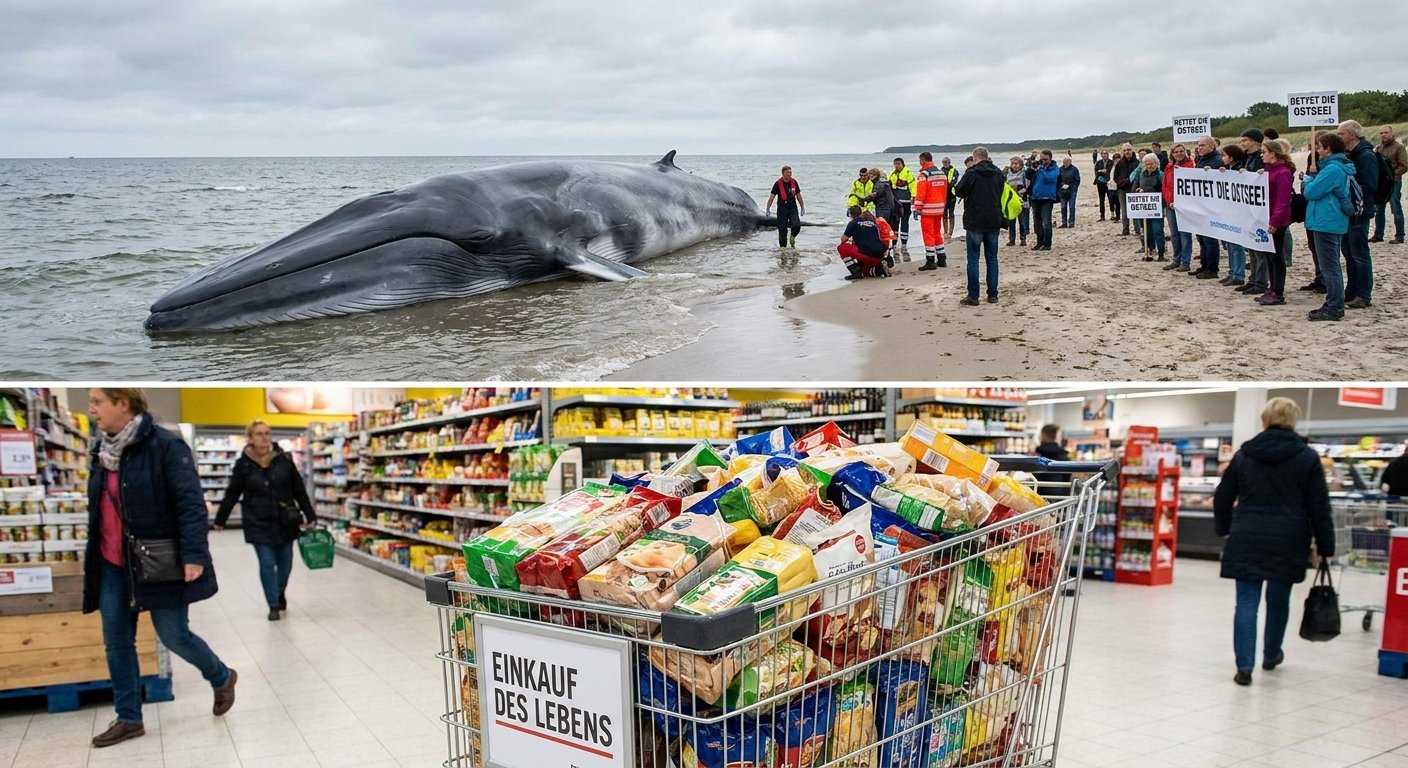
Hope, der Wal und was sein Schicksal mit unserem Einkaufskorb zu tun hat

Hope, the whale, and what his fate has to do with our shopping basket

From awareness to responsibility: Why each of us should think of Timmy the next time we buy fish.


Since the beginning of March 2026, a humpback whale has been keeping Germany on edge. First spotted in the port of Wismar, “Timmy,” also affectionately called “Hope,” had become entangled in a net and was rescued. Since then, volunteers, veterinarians, politicians, and the entire nation have been emotionally fighting for him. Human chains, rescue boats, sandbags, drones. Everything is being tried to save this one animal.
That’s beautiful. And it’s a good thing.
But it also confronts us with an uncomfortable question: Why are we so deeply moved by a single whale, while every day we buy products that systematically kill whales and dolphins?

What connects Timmy with our everyday life

Timmy’s story is not just a natural spectacle. It is also a mirror. According to Wikipedia, his appearance on German coasts is a sign of the partial recovery of humpback whale populations – the result of decades of international protection measures and the moratorium on commercial whaling. Protection has worked.
At the same time, Timmy may be dying from exactly what happens every day: fishing nets.
His first appearance: he had become entangled in a net.

Bycatch: The Invisible Catastrophe

Bycatch is the leading cause of death for marine mammals worldwide. What few people realize: with every fish stick, every can of tuna, every shrimp cocktail, this silent mass dying can be co-financed.
What exactly is bycatch? When fishing with large nets (trawl nets, gillnets or purse seines), it’s not only the target fish that end up in the net. Whales, dolphins, sea turtles, sharks and seabirds are also caught. Many die in agony because they can no longer surface or are injured by the pressure of the net.
Particularly dramatic: the death of a single whale can destabilize an entire family group. Whales live in close social units. If the experienced matriarch, who knows the best feeding grounds, dies, the entire group suffers.

The MSC label: No free pass for whales

Many consumers trust the blue MSC label (Marine Stewardship Council) as a guarantee of sustainable fishing. The problem: even MSC-certified products do not guarantee adequate whale protection.
According to a study by NABU and BirdLife International, only 13% of the MSC-certified fisheries examined received a good rating on the issue of bycatch. For the overwhelming majority, the unwanted bycatch rates of whales, dolphins and other threatened species did not even decrease after certification.
The Whale and Dolphin Conservation organisation (WDC) is also clear: MSC certifications do not guarantee that whales and dolphins did not suffer or die during the catch.

Which fish products are particularly problematic?

These products and fishing methods are particularly under criticism:

🚫 Avoid or question

  • Tuna from purse seine nets (often canned). High dolphin bycatch; even MSC-certified fisheries in the Mexican Pacific have been criticized
  • Prawns and shrimpEspecially from trawl fisheries using bottom trawls, which also destroy the seabed; in addition: North Atlantic prawn and lobster fisheries demonstrably contribute to the decline of the North Atlantic right whale
  • Fish sticks, breaded fish and convenience products.Here, the origin and fishing method are often not declared.
  • Krill products (dietary supplements, omega-3 from krill). Krill is the main food source for whales; fishing it literally deprives them of their means of survival
  • Gillnet fishing in the North and Baltic Seas. According to WDC, very likely associated with negative impacts on harbour porpoise populations

What can we do? The good news

Consumption plays a part in the decision. And this is where smantry becomes relevant: anyone who shops consciously, wastes less, and deliberately chooses alternatives is already doing a lot.

PortableText [components.type] is missing "image"


📱 How the Smantry app helps

When you use Smantry to plan your food and avoid leftovers, you automatically reduce your footprint – including on the oceans. Anyone who plans more consciously shops more purposefully, chooses plant-based proteins more often, and takes a second look at the label when buying fish.
Tip: Use Smantry to replace fish meals more often with sustainable alternatives, e.g. legumes, mushrooms or tofu as the main protein source, and save fish for moments when you really know what’s in it.

The conclusion: Timmy as a turning point?

Millions of people have been rooting for Timmy in recent weeks. This shows how deep our connection with these fascinating animals is. Now it’s time to turn this feeling into action.
Because while Timmy’s rescue is in the spotlight, whales and dolphins are silently dying in nets every day. Without a name, without a hashtag, without a live blog.
Let’s make sure that the empathy we feel for Timmy doesn’t end with his fate, but begins with our next purchase.

Read this articles as well:

Cooking without shopping: recipes from the pantry

Quiet Saving: The new saving trend without sacrifice

How to optimize food storage – clever hacks for your pantry


Sources & further links:

Read next